
HINTS Plus Test to Differentiate Stroke from Vestibular Neuritis
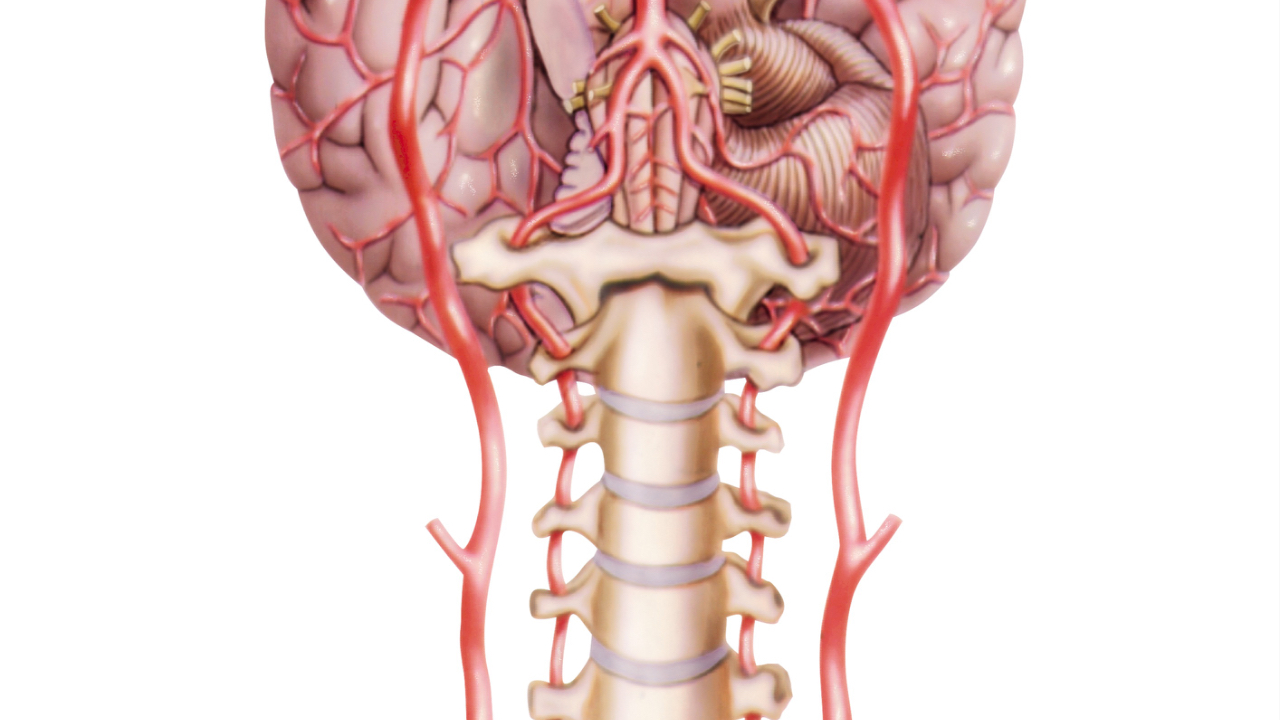
Have you ever seen a patient with acute dizziness and wondered whether it could be a stroke? You’re not alone. Distinguishing between a central cause such as a posterior circulation stroke and a peripheral cause like vestibular neuritis can be challenging, especially in the emergency setting.
That’s where the HINTS plus test comes in. This powerful bedside tool helps clinicians determine whether acute dizziness is due to a stroke or a vestibular disorder and it’s been shown to outperform early MRI when used correctly.
In this post, we’ll outline what the HINTS plus test is, how to perform each step, how to interpret the findings, and when to use it in practice.
What Is the HINTS Plus Test?
HINTS stands for Head Impulse, Nystagmus, and Test of Skew, with the “plus” referring to a bedside hearing test. Together, this compilation of tests help clinicians differentiate central (stroke-related) causes of acute vestibular syndrome (AVS) from peripheral causes such as vestibular neuritis or labyrinthitis.
The HINTS plus test should only be performed when:
-
The dizziness or vertigo is continuous (lasting hours to days, not brief positional episodes).
-
Spontaneous nystagmus is present.
-
There is no baseline ocular misalignment, so the skew test is interpretable.
When applied properly, the HINTS plus test has a sensitivity of up to 100% and specificity around 96% for detecting stroke in acute vestibular syndrome.
Step 1: Head Impulse Test
Purpose: To evaluate the function of the horizontal semicircular canal and vestibulo-ocular reflex (VOR).
How to Perform:
-
Ask the patient to fixate on your nose.
-
Quickly and unpredictably rotate their head about 15–20° to one side, then the other.
-
Observe for corrective saccades.
Interpretation:
-
Abnormal (corrective saccade present): Strongly suggests a peripheral vestibular hypofunction on the side toward which the head was turned.
-
Normal (no corrective saccade): Concerning for a central cause, particularly brainstem or cerebellar stroke.
Note: A positive (abnormal) Head Impulse Test does not completely rule out a central lesion.
- Certain central pathologies (e.g., lateral pontine strokes involving the vestibular nucleus or root entry zone) can produce false-positive HIT findings.
- For this reason, the HIT must never be interpreted in isolation. Its diagnostic value comes from integration with the full HINTS+ exam (direction of nystagmus, test of skew, and hearing assessment) and the patient’s clinical presentation.
- In acute vestibular syndrome, a normal HIT is more concerning than an abnormal one, but no single test rules stroke in or out.
🎥 Watch how to perform the Head Impulse Test
🎥 Example of a (+) Head Impulse Test in Vestibular Neuritis
Step 2: Nystagmus
Purpose: To determine if the nystagmus pattern is consistent with a peripheral or central cause.
How to Perform:
Ask the patient to look to their left for a few seconds and to their right for a few seconds while you observe for changes in nystagmus direction or character.
Interpretation:
-
Unidirectional horizontal nystagmus: More likely a peripheral pattern.
-
Direction-changing, vertical, or purely torsional nystagmus: Central pattern indicating a likely stroke.
🎥 How to look for spontaneous and gaze-evoked nystagmus
🎥 Example of spontaneous and gaze-evoked nystagmus (right unilateral vestibular loss)
🎥 Example of direction-changing nystagmus (central sign)
🎥 Example of downbeat nystagmus (central sign)
Step 3: Test of Skew
Purpose: To detect vertical ocular misalignment that signals a central lesion in the brainstem or cerebellum.
How to Perform:
Cover one eye for a few seconds, then uncover and cover the other eye, watching for vertical corrective movements of the uncovered eye.
Interpretation:
-
No vertical movement: Peripheral pattern.
-
Vertical corrective movement: Central lesion likely.
The “Plus”: Bedside Hearing Test
Purpose: To screen for AICA stroke, which can affect both hearing and balance organs.
How to Perform:
Perform a finger rub or whispered voice test to assess for hearing asymmetry.
Interpretation:
-
Unilateral hearing loss: Raises suspicion for AICA stroke.
-
Normal hearing: More consistent with vestibular neuritis.
Note: A vestibular labyrinthitis will also present with hearing loss and make it difficult to tease out labyrinthitis vs stroke. If hearing loss is the only findings aside from the spontaneous nystagmus, then assume it is a stroke until further testing proves otherwise.
When to Use the HINTS Plus Test
Use the HINTS plus test for patients with acute vestibular syndrome that is, constant vertigo or dizziness, spontaneous nystagmus, nausea or vomiting, and gait unsteadiness lasting hours to days.
Do not use it for:
-
Positional dizziness (e.g., BPPV)
-
Intermittent symptoms
-
Patients without spontaneous nystagmus
Quick Reference
| Test | Peripheral Pattern | Central Pattern |
|---|---|---|
| Head Impulse | Abnormal (saccade) | Normal |
| Nystagmus | Unidirectional | Direction-changing or vertical |
| Skew | No vertical correction | Vertical misalignment |
| Hearing (+) | Normal | Unilateral hearing loss |
If any of the HINTS plus components suggest a central pattern, manage the patient as a possible stroke until proven otherwise.
Excellent Overview Video
🎥 Dr. Peter Johns (Retired ER Physician, Ottawa)
Digital Resource for Clinicians
Access a digital version of the HINTS plus test for quick bedside reference in the ER or clinic:
👉 HINTS Plus Digital Guide – North 49 Therapy
References
Author

Kregg Ochitwa
Physical Therapist I Vestibular Therapist I Clinic Owner
Categories
All Categories